


Author, Lawyer Greg Lukianoff Speaks on Free Speech
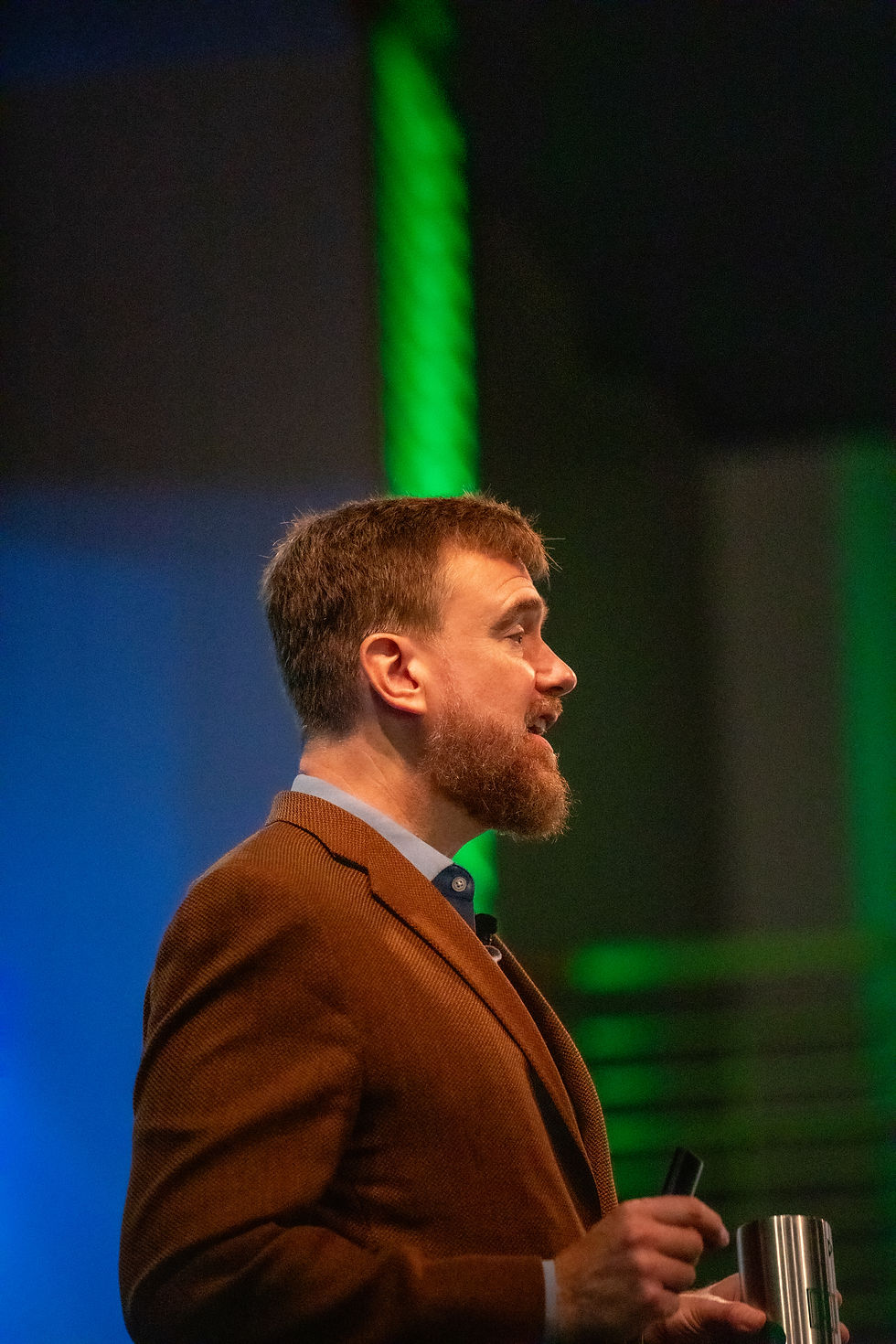


New York Times bestselling author and President of the Foundation for Individual Rights and Expression (FIRE) Greg Lukianoff visited campus to give a talk at an all school meeting about his advocacy for free speech on college campuses.
For two decades, Mr. Lukianoff has supported the First Amendment’s rights through his work on mob censorship, cancel culture, and the consequences of refraining from honest discourse.
In his speech, he covered the history of free speech, which he began by branding as an “eternally radical idea.” He explained that free speech has never been a straight-forward concept, that America has had a long-standing adherence to remembering history based on the leading figures of that time.
The speaker stressed the importance of dissent. He said that in a society that loves being right, it is important that people should be able to question those in power, constantly challenging old ideas and suggesting new ones.
He said to the audience that dissent is “the dread of tyrants,” a quote attributed to Fredrick Douglass in his essay, “A Plea for Freedom of Speech in Boston.” He also noted the importance of free speech in recent history, quoting civil rights activist and congressman John Lewis: “Without free speech, the civil rights movement would’ve been a bird with no wings.”
Mr. Lukianoff believes in the importance of preserving freedom of speech in educational systems. He believes free speech is essential not only for individual growth, but also for a healthy democracy. He explained to the audience that the human brain is designed to think the majority of the information we receive is factual — a phenomenon known as “unwarranted certainty”; therefore, for a government to function it cannot rely on one person’s thoughts and actions to lead the country.
He clarified that this feature of the brain helps humans survive but does not play a role in their pursuit of the truth. Mr. Lukianoff cited the printing press as the “original disruption machine” that allowed more complex ideas to be distributed more efficiently, although it ultimately perpetuated existing conflicts, such as civil wars and witch trials.
As his presentation came to a close, Mr. Lukianoff left the audience with two environments in which free speech truly flourishes: a space where people are genuinely curious and want to listen and a space where people are fully honest with each other.
Director of the CGCE Jason Kelly, who helped organize Mr. Lukianoff’s visit, said that he had been excited for the scheduled Q&A session which would have happened the day before school meeting that was unfortunately canceled due to Mr. Lukianoff’s health. Dr. Kelly said, “The Q&A the night before would have been a great way for [Mr. Lukianoff] to get a better sense of who the students were and then how to approach the school meeting the next day.”
He went on to give insight into what the CGCE is looking for in speakers and how they are choosing speakers to bring to campus. He said, as a new faculty member, he was mainly focused on listening to the current discourse at Deerfield. He encouraged students to approach him and discuss “what they think Deerfield needs in terms of civic engagement and global engagement, what they think is missing.” He wants to develop these conversations in novel and productive ways.
Co-leader of the Legal Journal Club Anthony Ortega ’27 said he was surprised by the content of Mr. Lukianoff’s presentation. He agrees with Mr. Lukianoff’s approach to talking about free speech, “I think when we talk about free speech, we should think about how it was created and the reason for why we have free speech protections in this country.” However, Ortega hoped he would transition to how students can practice their free speech rights now. “I thought he was gonna talk a little bit more about how free speech works at public schools and how we can utilize that as a parallel for private school expressive freedom,” said Ortega.
Instead, Mr. Lukianoff primarily focused on the origins of free speech, which Ortega resonated with but thought he did not make a “direct call to action for the student body.” After Mr. Lukianoff’s visit, Ortega said, “a lot of people that I asked and just people that have come up to me have very strong opinions.” Ortega believed that the discourse concerning Mr. Lukianoff’s presentation is important for the student body. He said, “We shouldn't have guest speakers that don't have an impact.”
Similarly, Natalia Northover ’28 said that although he was “a great storyteller” and his lack of use of very technical terms would have been good for “an audience our age.” However, she still inferred that “a lot of people disengaged because he was solely focused on the public school system.” She also believed that Mr. Lukianoff’s alleged use of AI-generated images would send contradictory messages to the Deerfield population: “I think it’s hard to listen to Dr. Austin give speeches now about [how] we’re so anti-AI because you got a speaker to show up and use AI the whole time.”
Dr. Kelly added on to this sentiment, describing similar student reactions in his U.S. and China Relations class. “That’s useful to reflect on … that temptation to use AI for work because it seems convenient,” he said. He also saw student accusations of Mr. Lukianoff’s use of AI as “a good way to… prompt that conversation” about the application of both AI and free speech.